This document outlines the technical requirements for deploying and connecting data center proxies to cloud servers in the Hong Kong region (including connection and monitoring specifications). The content focuses on key areas such as networking, physical access, power and environment, security permissions, performance monitoring, and log management, enabling agents to be quickly implemented during the bidding, integration, and operation and maintenance phases.
Overview of general requirements
The overall requirements clearly define the objectives and boundaries of the access and monitoring specifications: Ensures 99.x% availability, link redundancy, auditable permission management, and comprehensive monitoring and alerting processes. Data center proxies should be centered around SLAs and, in conjunction with local compliance requirements and operational practices in Hong Kong, develop implementable plans and acceptance criteria.
Network access specifications
Network access specifications include the type of physical link (single-mode/multi-mode fiber, copper cable), the link termination interface (SFP/SFP+, RJ45), and the required transmission speed. The agent must provide a link topology diagram, end-to-end latency assessments, and details regarding network segmentation to ensure stable and reliable communication between the cloud host and the public internet, dedicated lines, and peering connections.
Bandwidth and link redundancy
Bandwidth planning should be based on anticipated business peaks and growth, with the ability to support flexible expansion. For link redundancy, it is recommended to use multiple exit paths and carriers, and configure BGP or dual-ISP strategies to enable automatic failover and route optimization. Link SLAs and handover delays must be quantified in the technical specifications.
IP addresses and routing policies
IP allocation must comply with RFC standards, and the rules for using private and public IP ranges must be clearly defined. The routing strategy should include static routes, dynamic BGP policies, AS paths, and routing filtering rules to ensure rapid route convergence and compliance with security isolation requirements. NAT, load balancing, and firewall policies must be defined in sync.
Physical and Rack Access Specifications
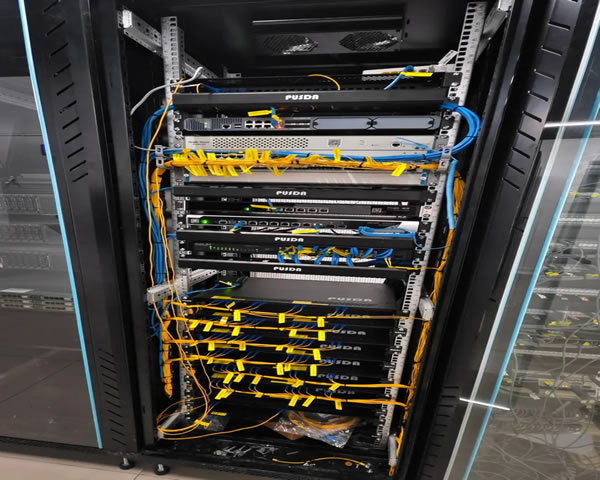
The physical access specifications cover cabinet dimensions, opening sizes, cable routing, grounding requirements, and the procedures for entering and exiting the data center. The agent must provide a cabinet topology diagram, a list of U-slot assignments, details regarding fiber optic cabling, and the scheduled time window for on-site installation to ensure that the equipment deployment, cabling, and acceptance processes proceed smoothly and in compliance with the data center management regulations.
Requirements for power and environmental monitoring
The power requirements include dual power distribution, UPS backup, generator support, and a power reserve strategy. Environmental monitoring must include alerts for cabinet temperature and humidity, smoke detection, water intrusion, door opening/closing status, and electrical current load. Monitoring data should be integrated into a centralized platform that supports threshold-based alerts and historical trend analysis.
Security and Permission Management
Security and access management require a strict distinction between physical access, device management, and operational accounts. Adopt the principle of least privilege, role-based access control (RBAC), multi-factor authentication, and operational auditing. The agent must provide a process for responding to security incidents, as well as regular security audits and vulnerability management plans.
Performance monitoring and alerting strategies
Performance monitoring metrics include bandwidth utilization, packet loss rate, latency, as well as host CPU/memory/disk I/O statistics. An alarm policy must define thresholds, severity levels, suppression rules, and notification mechanisms (email, SMS, Webhook). The monitoring system should support the display of charts, the storage of historical data, and the execution of automated scripts.
Indicator collection and monitoring tools
Metric collection should utilize standardized protocols (SNMP, ICMP, NetFlow, sFlow, API) and support integration with mainstream tools such as Prometheus, Zabbix, and Grafana. The agent must clearly define the data retention period, sampling frequency, and any requirements for further processing to ensure that the monitoring data can be used for capacity planning and troubleshooting.
Log management and auditing
Log management requires the centralized collection of system logs, network device logs, security event records, and interface call logs. It should employ tamper-proof storage solutions and enable indexed retrieval of this data. Audit policies must include log retention strategies, compliance report generation, and automatic alerts for suspicious activities to support post-event evidence collection and compliance audits.
Delivery acceptance and continuous optimization
Delivery acceptance should be based on predefined test cases, including tests for network connectivity, bandwidth benchmarks, redundant switching mechanisms, alarm triggering, and security controls. After successful acceptance, a continuous optimization mechanism is established to regularly review SLAs, capacity, and security policies, and to adjust the list of technical requirements in accordance with business growth.
Summary and Recommendations
The access and monitoring specifications prepared for Hong Kong cloud hosting data centers should take into account stability, observability, and compliance. It is recommended to quantify SLAs and alert rules in the technical specifications, use standardized monitoring and logging platforms, establish clear delivery and acceptance processes, and maintain communication with the data center operators to ensure long-term maintainability and scalability.